
Building A Connected Trail Network in the Northwoods


Since 2010, the Great Headwaters Trails Foundation (GHTF) has been working toward building 40 miles of new biking and walking trails in eastern Vilas County. We recently spoke with Laura Van Valkenberg, President of GHTF, about the role trails play in the Northwoods, their impact on local communities and businesses, and what it takes to build a connected active transportation network in a rural region.
For someone who may not know the Great Headwaters Trails Foundation, what is the vision for the trail system in eastern Vilas County, and what would a fully connected system mean for the Northwoods?
Laura: Founded in 2010 with a mission to connect the communities of eastern Vilas County with bicycle and pedestrian trails, we had an ambitious vision: 40 miles of trail by 2020. Little did this grassroots group realize how complex building a trail network would be!

In 2021, we completed our first trail, connecting the communities of Conover and Phelps. Since 2019, we’ve been actively working on the River Trail, which will connect St. Germain and Eagle River.
Our vision is to eventually connect Eagle River to Conover, then connect Conover to Land O’ Lakes. Once GHTF has completed its planned system and we’re connected to the existing Heart of Vilas County Bike Trail System, nearly all of the communities in Vilas County will be connected by bicycle and pedestrian trails—north, south, east and west.
For the Northwoods, that means more than simply having places to ride a bike or take a walk. A connected trail system gives residents and visitors a way to experience our communities, lakes, forests and businesses without always having to get in a car. It also supports tourism, healthy lifestyles and the quality of life that makes the Northwoods such a special place to live and visit.

What’s your personal connection to biking, and how did you find your way to the Great Headwaters Trails Foundation?
Laura: My oldest brother, Phil Van Valkenberg, was my greatest influence regarding biking. He’s the oldest, and I’m the youngest of six – and his two oldest children are my age.
Phil was one of the founders of the Yellow Jersey Bike Co-Op in Madison in the early 1970s and wrote numerous books about cycling in Wisconsin. His 1974 book, Wisconsin Bike Trips, Twenty Tours for Young and Old, was the state’s first tourism guide for bicyclists. He is also known for starting several iconic bike rides and races, including the Fat Tire Tour of Milwaukee, Steel is Real, and the Chequamegon Fat Tire Festival.
As a kid, I was fortunate enough to tag along on many of his bike-and-camping trips while he was researching his books. So, biking has been part of my life for a very long time.

As for my involvement with GHTF, my husband (Gary Meister) is one of the organization’s founders. When we moved from Cambridge, Wisconsin, to Eagle River in 2008, Gary was retired and looking for things to get involved in. After I retired in 2019, I became more involved as well. What started as my husband’s volunteer project eventually became something we could work on together.

What does it take to build a trail? For people who see a proposed trail and wonder, “Why does this take so long?”—what are some of the biggest hurdles involved in turning a trail concept into a finished project?
Laura: The obvious answer is funding. It takes a long time to raise the money needed to build a trail, particularly when you’re a grassroots nonprofit raising funds primarily from individual donors, businesses, and grants.
Another major hurdle is local municipal support. For any trail that will use state DOT right-of-way, the municipality needs to enter into a State Municipal Agreement (SMA) with WisDOT. The SMA requires the municipality to agree to be responsible for the trail’s ongoing upkeep and maintenance.
"With municipal budgets already stretched, local officials understandably have to consider whether committing to trail maintenance will become a burden on local taxpayers."
And then there is everything that happens between the idea and the construction. A trail has to be studied and designed, property and easement issues have to be addressed, environmental and other permitting requirements have to be met, municipalities and other agencies have to approve the project, and funding applications can take years to work through. There are also engineering, bidding, and construction requirements that have to be completed before a shovel ever goes into the ground.

The public often sees the ribbon cutting, but not the years of work that come before it. A successful trail project requires patience, persistence, cooperation among many partners and, ultimately, the resources to turn a good idea into a sustainable public asset.
What are the biggest challenges to expanding the trail system? What does it take to get different communities and organizations aligned and moving a regional trail project forward?
Laura: As I mentioned earlier, future maintenance obligations are a significant challenge. I think it’s unrealistic to expect area communities to simply welcome the responsibility and expense of maintaining additional miles of trail. Their budgets are tight, and local officials have to carefully consider every long-term financial commitment.
"I sometimes wish communities would think of recreational trails as linear parks and incorporate them into their parks and recreation systems. But we understand the financial realities they face."

That’s why I believe it’s our responsibility not only to help build the trails, but also to think about how we can support them after they are built. One way GHTF hopes to do that is by establishing a maintenance endowment fund that can provide a sustainable source of funding for trail maintenance into the future.
Our priority right now is raising the money needed to build the trails, but we can also accept donations specifically for a maintenance fund. Over time, our goal would be to grow that fund into an endowment that helps ensure these trails remain safe, attractive, and well-maintained for generations to come.

Tell us about a moment when you realized the trails were having a bigger impact than you expected.
Laura: In the summer of 2025, two economic impact studies were conducted on Vilas County-area trails. The study of the Heart of Vilas County Bike Trail System showed that nearly $26 million comes into the area annually from people who use the trail system. Similarly, a study of the Three Eagle Trail found an estimated $2 million annual economic impact on Eagle River, Lincoln and Three Lakes during the summer.
I already knew that bicycle tourism was having an impact on our local economy, so I was thrilled to see such thorough studies put actual numbers behind it. What really surprised me was seeing how the impact grows when trails are connected into a network rather than functioning as individual trails. More on community benefits.

"A beautiful, well-maintained trail can attract visitors – but a connected network gives people the opportunity to travel farther, visit multiple communities, stay longer, and spend more money along the way. It makes me wonder: What will the impact be when we connect communities throughout Vilas County? That's the potential that really excites me."
The 11-mile Conover-Phelps Trail has now been operating for several years (since 2021). What have you learned from that project that is shaping how you approach the next generation of trail development?
Laura: The Conover-Phelps Trail is a combination of hard-packed crushed stone and paved trail. The first 8 miles from Conover toward Phelps are not paved. When we built that portion, we collaborated with the local snowmobile clubs to design a trail that could accommodate snowmobiles in the winter and bicyclists and pedestrians the rest of the year.
As we got closer to Phelps, the final two miles were not going to be used by snowmobiles, so we chose to pave that section.
Working with the snowmobile clubs was absolutely the right decision because it allowed us to meet the needs of both user groups. At the same time, our experience with the trail has shown us that paved surfaces are highly valued by many recreational bicyclists and provide a different level of accessibility and usability. Whenever possible, we'll look for opportunities to incorporate paved trail into future projects.

Congratulations! You recently were awarded a $1.3 million grant from the WisDOT Transportation Alternatives Program (TAP). Tell us more about what’s planned for the River Trail project and what is most exciting about this particular expansion?
Laura: We are ecstatic about the TAP grant award! A tremendous amount of work went into our application, and I’m very proud of our team and our municipal partners for their hard work.
We’re currently working on the engineering design to get the project shovel-ready. We had hoped to break ground in 2027, but we’ve since learned that the TAP funds will not be available until fiscal year 2030, so the construction schedule will have to be adjusted accordingly. In the meantime, we’ll continue working on the rest of the 10-mile River Trail.

Initial estimates indicate that the entire River Trail could cost upwards of $12 million to construct. That includes a recreational bridge over the Wisconsin River, which will be an exciting feature of the trail.
There’s a lot of fundraising ahead of us, but we’re committed to seeing this project through. The TAP award is a major step forward, but it is just one piece of a much larger project. We’re not going to rest until the River Trail is completed.

Beyond the River Trail, what other trail expansion efforts are on the horizon, and what support (from residents, local businesses, community organizations, or others) would be most helpful in making those projects a reality?
Laura: We’re currently working on a 2-mile extension of the Conover-Phelps Trail. This will provide a paved trail from where the trail ends today in Conover to Torch Lake County Park and Campground south of Conover.
Eventually, we hope to continue south from Torch Lake County Park and connect to Eagle River, creating an important link between the Conover-Phelps Trail and the River Trail.
As with all of our projects, financial support is critical, but there are many other ways people can help. Local businesses and organizations can become partners, residents can advocate for trails in their communities, and volunteers can help us with everything from fundraising and outreach to events and trail stewardship.
"Ultimately, these are community projects. The more people who see themselves as part of the effort, the closer we get to making the vision a reality."

Many conversations about active transportation focus just on cities and suburbs. What is different about building a bike and pedestrian network in a rural Northwoods community – and what opportunities does that create?
Laura: Rural trails connect towns rather than neighborhoods, and our communities are often about 10 miles apart. That makes our trail system very different from an urban or suburban active transportation network.

I don't expect our trail system to have a huge impact on reducing automobile use for daily commuting the way trails can in a city, where people may live just a few miles from where they work. Our greatest opportunity is in recreation, tourism, and quality of life.
As the trail network grows, however, I strongly believe we’ll see more residents using the trails for daily exercise—walking, jogging, and biking—for health and well-being. We see that today on the Conover-Phelps Trail and Three Eagle Trail.
"So while rural trails may not replace the car for the daily commute, they can become an important part of how people live, recreate, and safely experience their communities."
GHTF's long-term vision is about connecting communities rather than creating isolated trail segments. Why is connectivity so important, and what becomes possible when communities are linked by a continuous trail network?

Laura: A connected network of trails is far more attractive to visitors than a collection of isolated trail segments. When trails connect communities, riders have the opportunity to plan longer trips, stop in different towns, visit local businesses, and experience more of what the Northwoods has to offer.
But it’s not just about the distance someone can ride. The real magic is in the journey. Riding through beautiful forests and wetlands, passing picturesque Vilas County lakes and stopping in unique, welcoming communities gives people an opportunity to slow down and get away from the noise and bustle of everyday life.
Connectivity also gives people choices. Someone can ride five miles, 20 miles or 50 miles depending on their interests and abilities. Families can enjoy a short outing, while more serious cyclists can make an entire day (or even a multi-day trip) out of exploring the region.
That's what we're ultimately trying to create: not just individual trails, but a way for people to experience the Northwoods from a bicycle or on foot.
The 2025 economic impact study estimated that the 55-mile Heart of Vilas County Bike Trail System generates about $25.7 million in economic activity. What does that look like on the ground? Can you share any first-hand stories or examples from local businesses that demonstrate how the trails are contributing to the Northwoods economy?
Laura: The $25.7 million figure can be difficult to visualize, but on the ground it means people spending money in the communities they visit. A cyclist who comes to ride the Heart of Vilas trail system may stay in a hotel or vacation rental, eat at local restaurants, stop for coffee, visit a brewery, buy groceries, purchase equipment or supplies, and make other purchases during their stay.

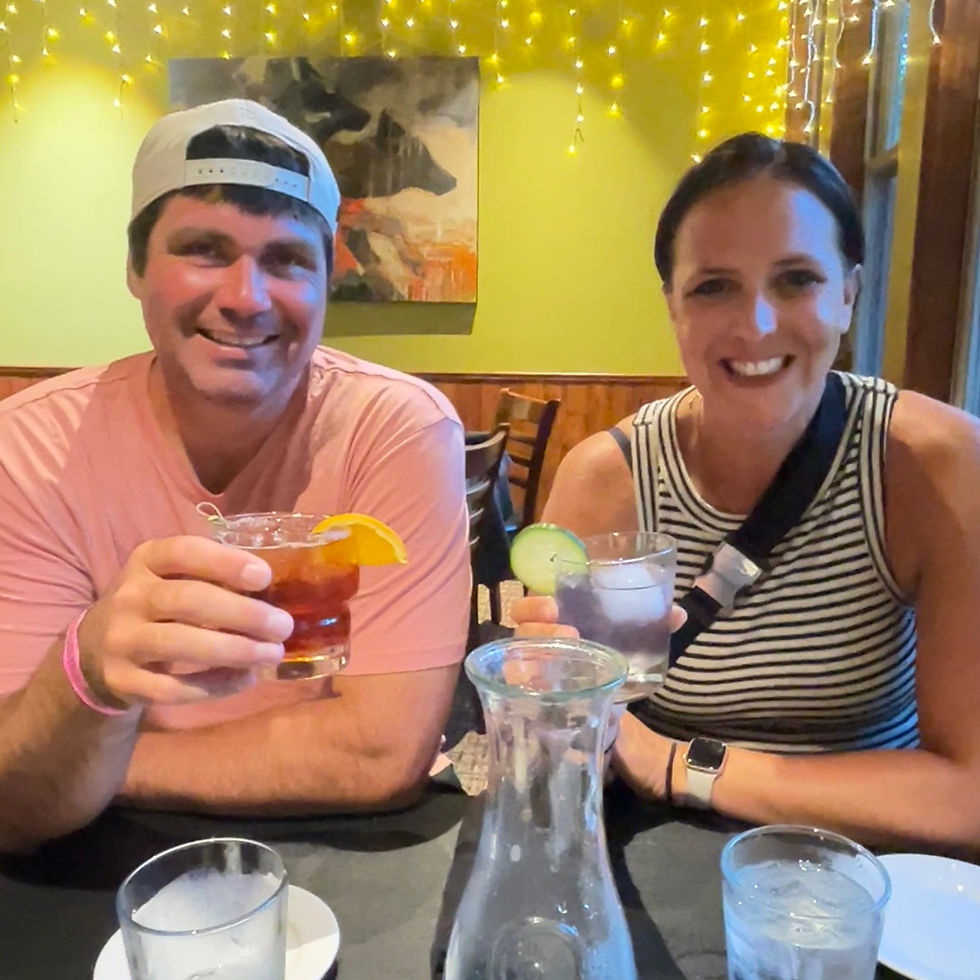
And importantly, trail visitors don't necessarily spend all of their time on the trail. They ride into our communities. That's where the economic impact spreads beyond the trail itself.
We've also seen how trail events can introduce people to the area who may return later with their families or friends. That's one of the reasons connectivity is so important. The more communities we connect, the more opportunities there are for visitors to explore the region—and for local businesses to benefit from that traffic.
And what's the strongest argument for investing in trails that has nothing to do with tourism?

Laura: Health and well-being.
Not everyone is going to use a trail as a tourist, but everyone benefits from having safe, accessible places to walk, run, and ride a bike close to home.
We see people of all ages using the Conover-Phelps and Three Eagle trails for exercise and recreation. A parent can ride with a child, someone can take a morning walk, a runner can get some exercise, or an older adult can enjoy a bike ride in a safe environment away from traffic.
Bike Tourist Must-Stops in Vilas County


Have you encountered any skepticism about investing in bicycle and pedestrian infrastructure? If so, what arguments or experiences have been most effective in demonstrating the value of trails in your region?
Laura: Yes, there is still some skepticism about investing in bicycle and pedestrian infrastructure. Two of the comments I hear most often are that bike trails are a waste of taxpayer money and that bicyclists don't contribute much to the local economy.

When I hear the first argument, I point out that GHTF is a private nonprofit raising private dollars to help build these trails. We do apply for federal and state grants, but those programs are specifically designed to fund transportation and recreational infrastructure. Our job is to bring those outside dollars into our communities and leverage them with local and private support.
As for the idea that bicyclists don't contribute to the local economy, I think we sometimes make the mistake of imagining a cyclist as someone who rides into town, fills a water bottle and leaves.
"That's not how bicycle tourism works. Visitors may ride for several hours, but afterward they need a place to stay, a restaurant for dinner, a coffee shop, groceries, bike supplies and other services. They may come back with their family or return for another visit."
And there's an important point for local businesses: you can't always tell who your customer is because of how they arrived that day. The person sitting at your restaurant may have spent the afternoon riding a trail, or they may have arrived by car. Either way, they're a visitor spending money in the community.
I think the most effective way to overcome skepticism is simply to build good trails, welcome everyone who uses them, and let the results speak for themselves.
In the News: Sep 29, 2026 – Wisconsin State Journal: Forested bike trails are a huge draw to Wisconsin's Northwoods
Looking ahead! If we come back and talk to you five or ten years from now, what do you hope the trail system looks like? What connections or projects would make the biggest difference to Northwoods communities?
Laura: Five years from now, I hope people will be able to look at a map of Vilas County and see a growing network of connected trails rather than a collection of individual trail segments. The Heart of Vilas County Bike Trail System will have expanded, and people will be able to ride farther and experience more communities than they can today.

Ten years from now, my vision is that someone will be able to ride from Manitowish Waters to Eagle River and Three Lakes, with connections continuing north, south, east and west.
The River Trail will be a huge piece of that vision. Connecting St. Germain and Eagle River will create opportunities for people to travel between communities by bicycle that simply don't exist today.
"But ultimately, I hope the biggest change isn't just measured in miles of trail. I hope we see more people using the trails, more visitors discovering our communities, more residents incorporating walking and biking into their daily lives, and more communities recognizing trails as an essential part of the Northwoods quality of life."
That's the legacy I'd like GHTF to leave.

Learn more: https://ghtrails.org/


Comments